
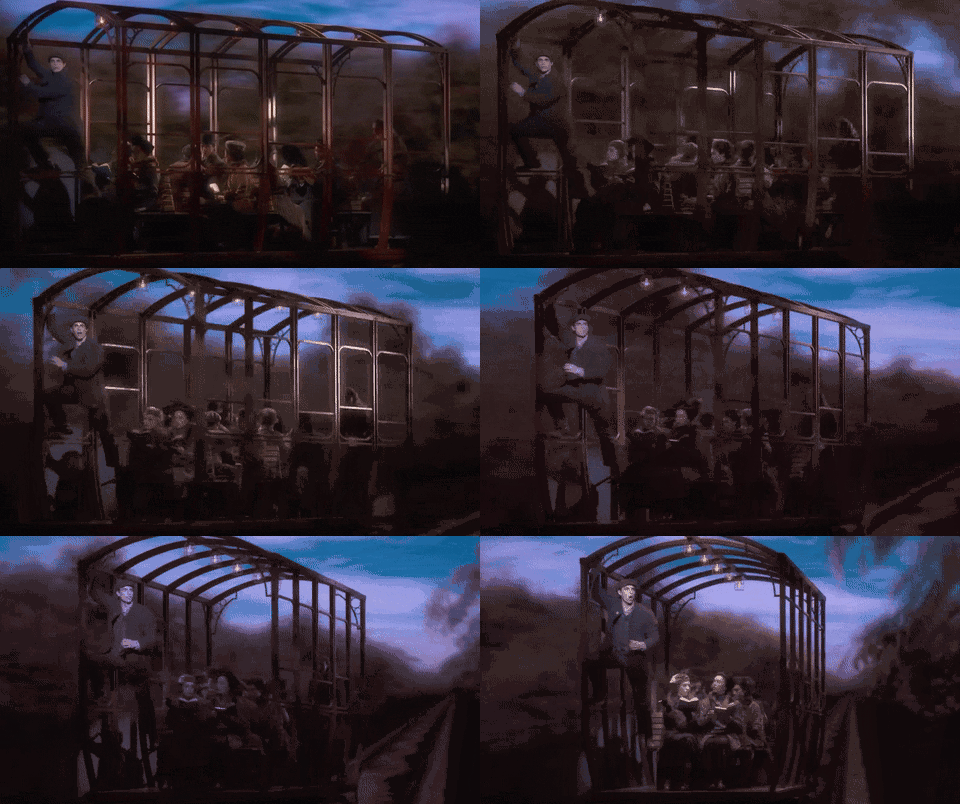
Projection is a practical and versatile way to create sets, backgrounds, and visual effects in theatre. From simple scenery to animated environments, projections can help transform a stage. It can be used in conjunction with set pieces, or on its own, it can make an environment feel more tangible. Or can be used to aid in special effects. Look no further than wand fights in Harry Potter and the Cursed Child, or the iconic train journey in the musical Anastasia.
Introduction
The small team behind Cue-1, met doing community theatre shows, and youth drama productions. Shockingly we struggled for years finding video content that was actually nice to look at onstage, didn’t distract from the performance, the reason we see shows, and looked like it was nicely lit and fit in with other production elements. We’ve spent hours trying to colour correct and relight these video packages, and combining them with real set pieces was a nightmare and we decided that was enough and made our own. We’re not a large company but since those high school days started working with professional theatre companies, touring shows, and festival systems design.
Schools, community theatres, and large-scale professional musical theatre programs use projection when it’s suitable for telling the story. It can help with budget restrictions, staff workload and with adding cohesion to the production elements. The issue seems to be that good-looking projection design is very prohibitively expensive. That leads to companies not using projection because it looks cheap, it’s not thoughtful to the story or the mood. Broadway and London’s West End often spend tens of thousands on custom-designed video and projection mapping because that’s been the only way to make video content that fits the look of the show.